
Interbank Price Delivery Algorithm
Preface
The previous chapters covered the most basic elements of ICT/SMC. Starting from this chapter, we will move into theories that are more core and more conceptual. Some of these ideas may be difficult to represent in a standardized way on a chart, but they have a major impact on your chart-reading framework. If you have not fully understood the previous material, make sure to review it properly and learn step by step.
Price movement does not depend on support and resistance. So-called support and resistance are only market illusions. Every price movement in the market is controlled behind the scenes by an invisible hand, and that "hand" is called the Interbank Price Delivery Algorithm (IPDA).
There are four states of price delivery:
- Expansion
- Retracement
- Consolidation
- Reversal
Price delivery has only these four states, and price transitions between them. Each state has its own characteristics, and state transitions usually come with contact into a key level or price range.
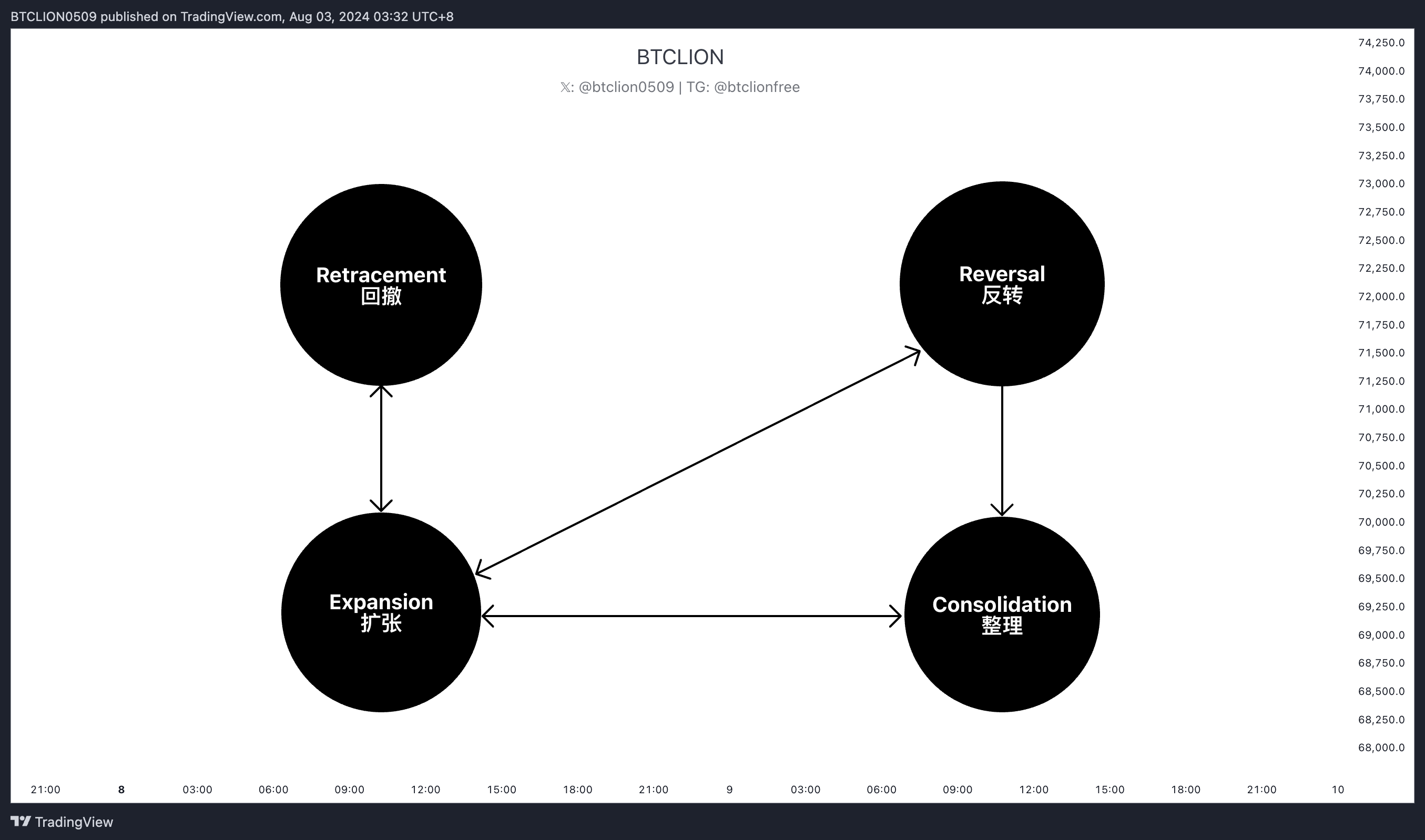
The chart shows the transition relationship between the four states.
Consolidation
- Consolidation means price is moving inside a clear trading range, such as a channel, box, triangle, and so on.
- It shows that price does not have a strong intention to rise or fall significantly.
- All market moves begin from consolidation.
- Pay attention to the EQ of the consolidation range.
- Look for long opportunities when price reaches Discount or when SSL is swept, and look for short opportunities when price reaches Premium or when BSL is swept.
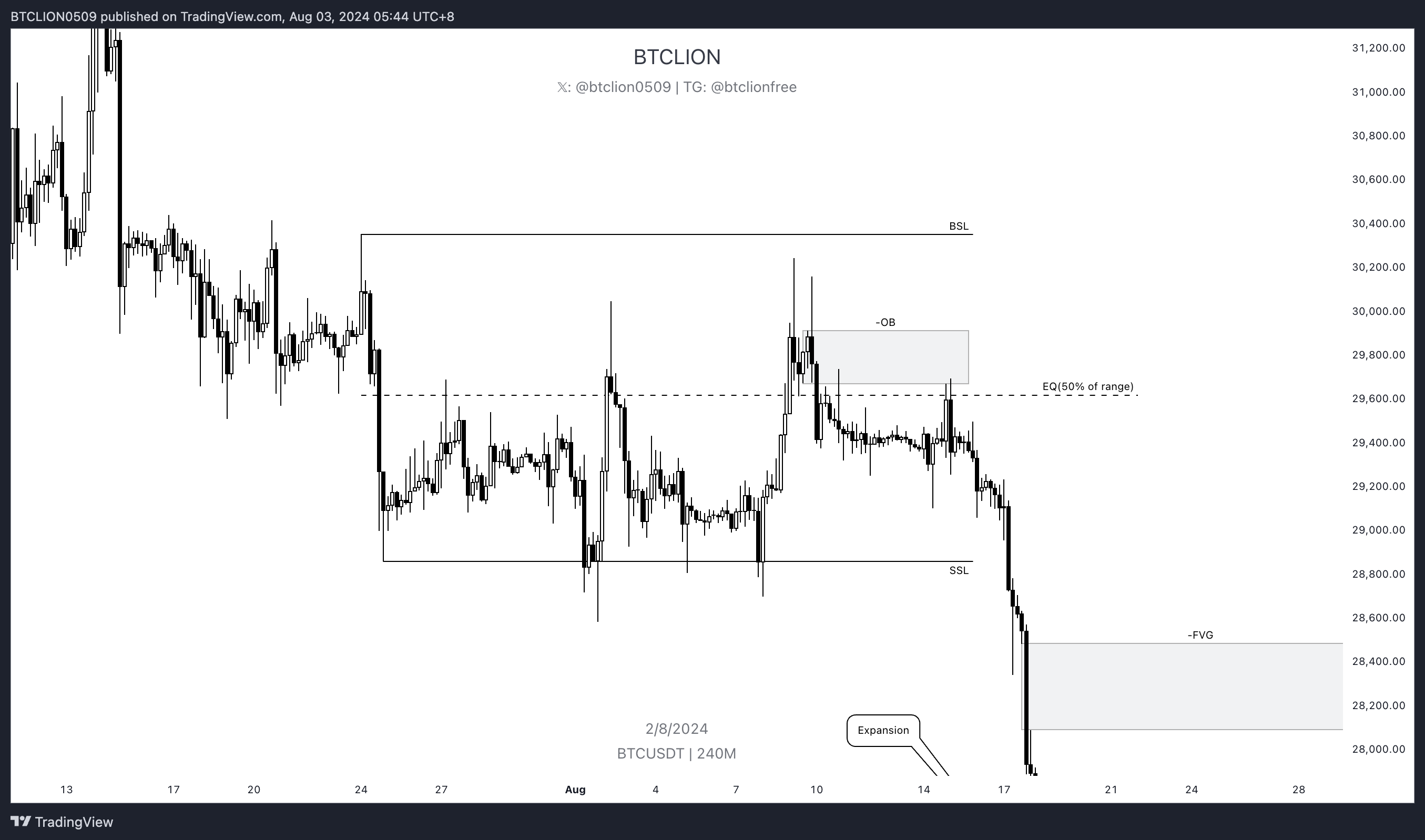
The chart shows a standard Consolidation.
-
We can look for shorts at Premium, above EQ, or when BSL is swept. We can look for longs at Discount, below EQ, or when SSL is swept. This allows us to profit by following the Market Maker's Accumulation behavior.
-
We can also see that when the Consolidation range is broken to the downside, price produces a large Displacement, which can be viewed as a typical Expansion.
Expansion
- Expansion refers to fast price movement.
- When Expansion appears, it means the Market Maker wants to reprice the asset.
- Expansion is the main part of Price Delivery.
- We want MSS and FVG to appear together with Expansion.
- Watch the EQ or OBs near EQ for entries.
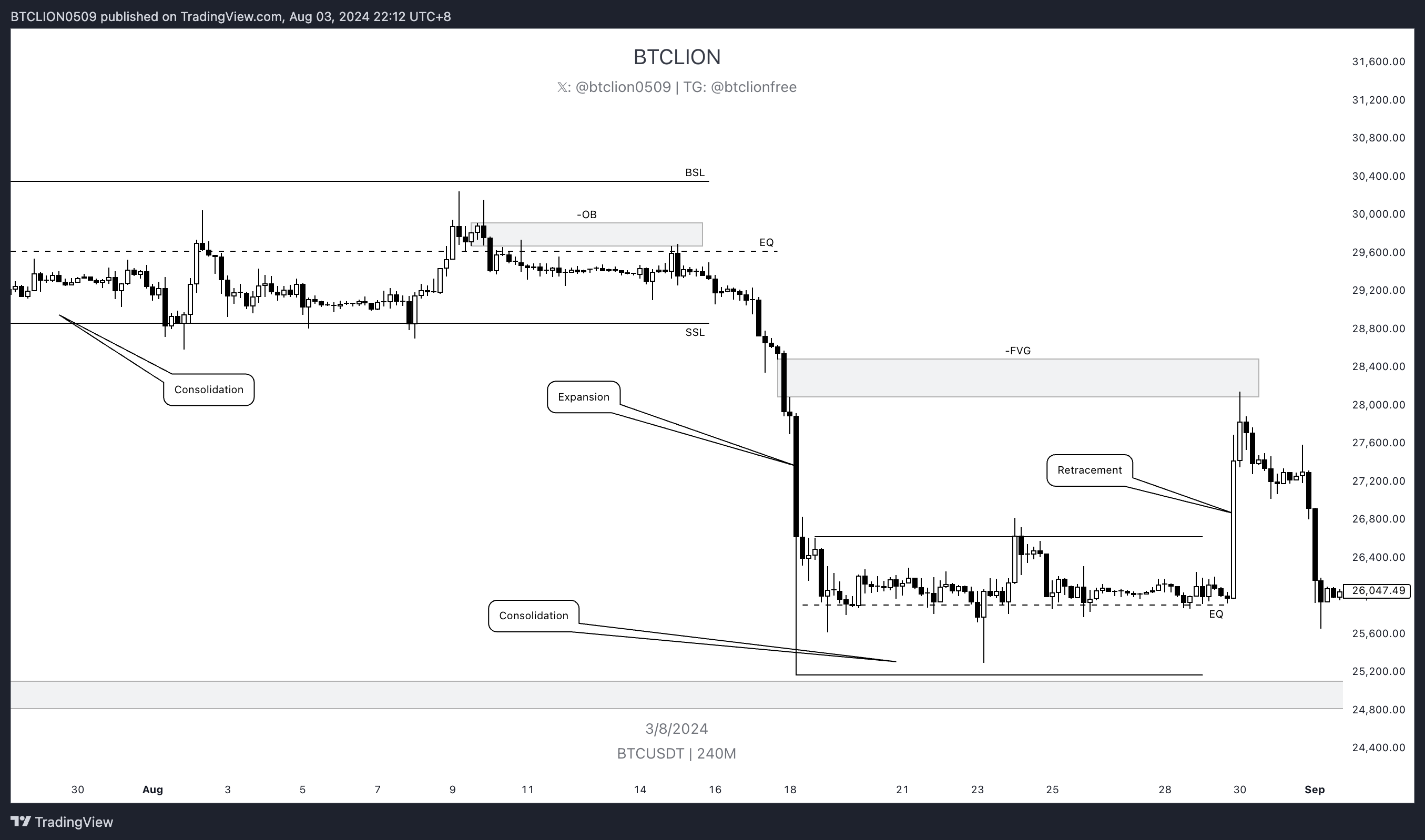
This chart is the same as the previous one. It shows a standard Consolidation followed by Expansion.
- When price touches EQ or respects an OB near EQ, we can use that OB near EQ for entry.
- Participating in Expansion is essentially profiting by following the Market Maker's Price Delivery.
Retracement
- Retracement means price returns into the most recently created price range.
- When price returns into a recent price range, it shows that the Market Maker wants to reprice into the Fair Value Gap (FVG), where trading was inefficient.
- Watch the FVG for entries.
- When price fills the FVG, we can use the depth of the fill to judge how strong the current market is.
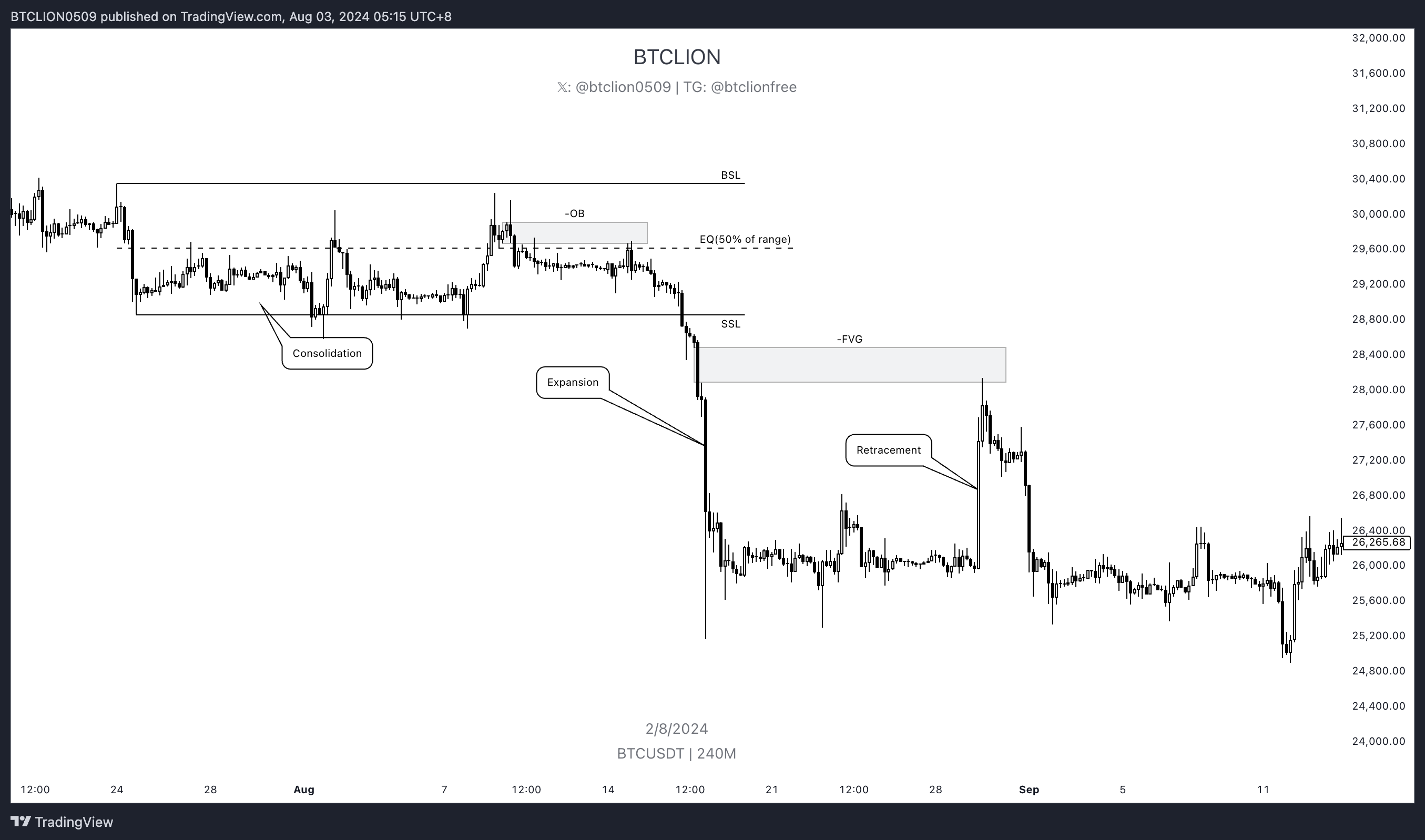
This chart is the same as the previous two charts. It shows a typical Retracement. Here we can see price entering low-level consolidation after Expansion, then retracing into the FVG.
- We can enter when price respects the FVG.
- Participating as Retracement ends is essentially profiting by following the Market Maker as it continues Price Delivery.
Reversal
- Reversal means the current trend ends and price starts moving in the opposite direction.
- When Reversal appears, it means the Market Maker has taken enough liquidity and wants to move price in the opposite direction to seek new arbitrage space.
- Watch HTF POI and MSS/CISD.
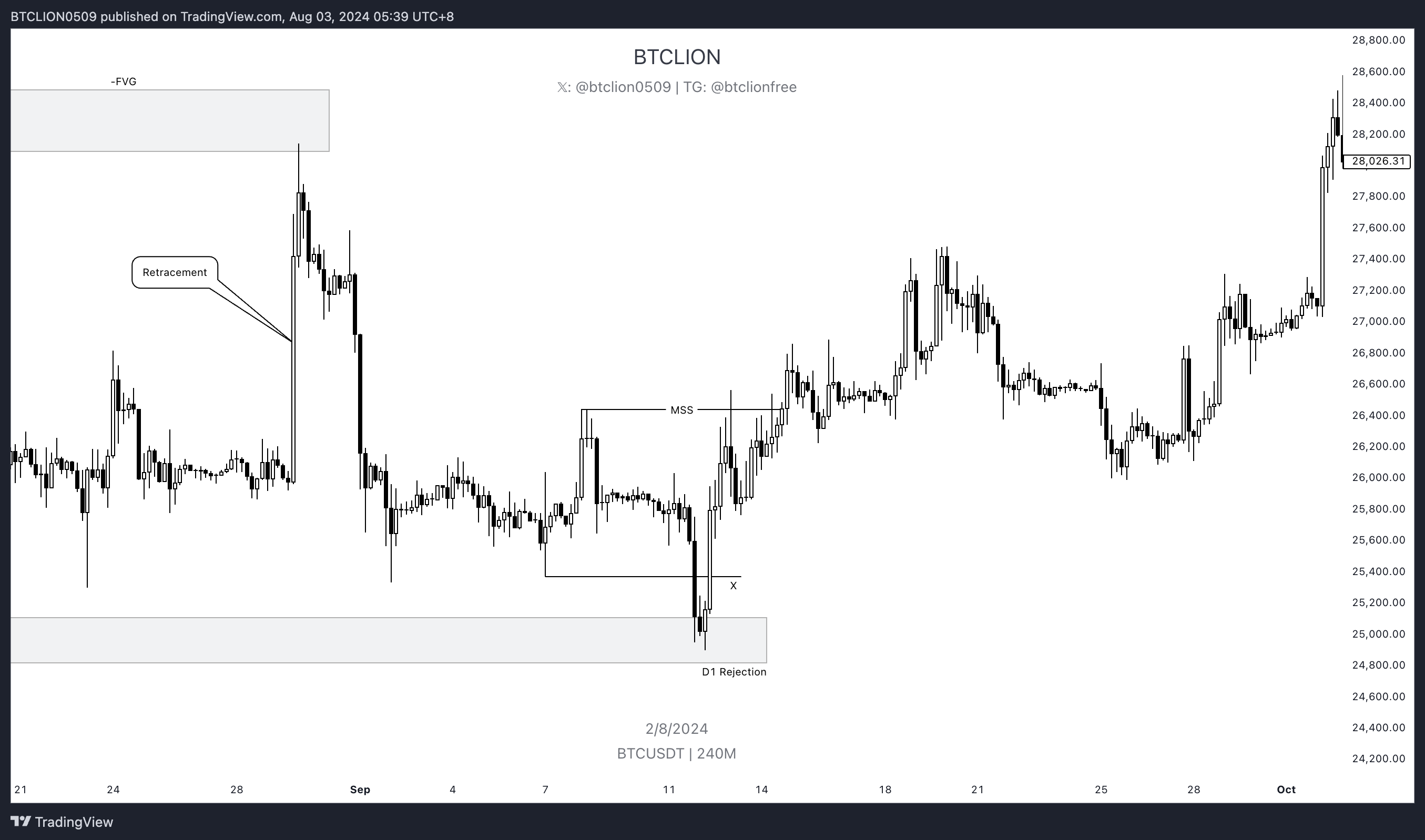
This chart is the same as the previous three charts. It shows a standard Reversal structure. After sweeping the low's BSL and touching a Rejection on the daily chart, price rallies upward, produces MSS, fully invalidates the previous downtrend, and begins a new rally.
- We can use structural change to determine whether Reversal has occurred.
- Participating after Reversal is confirmed is essentially following the expected reversal in Price Delivery.
- Do not gamble on a reversal before price reaches an HTF POI.
Review
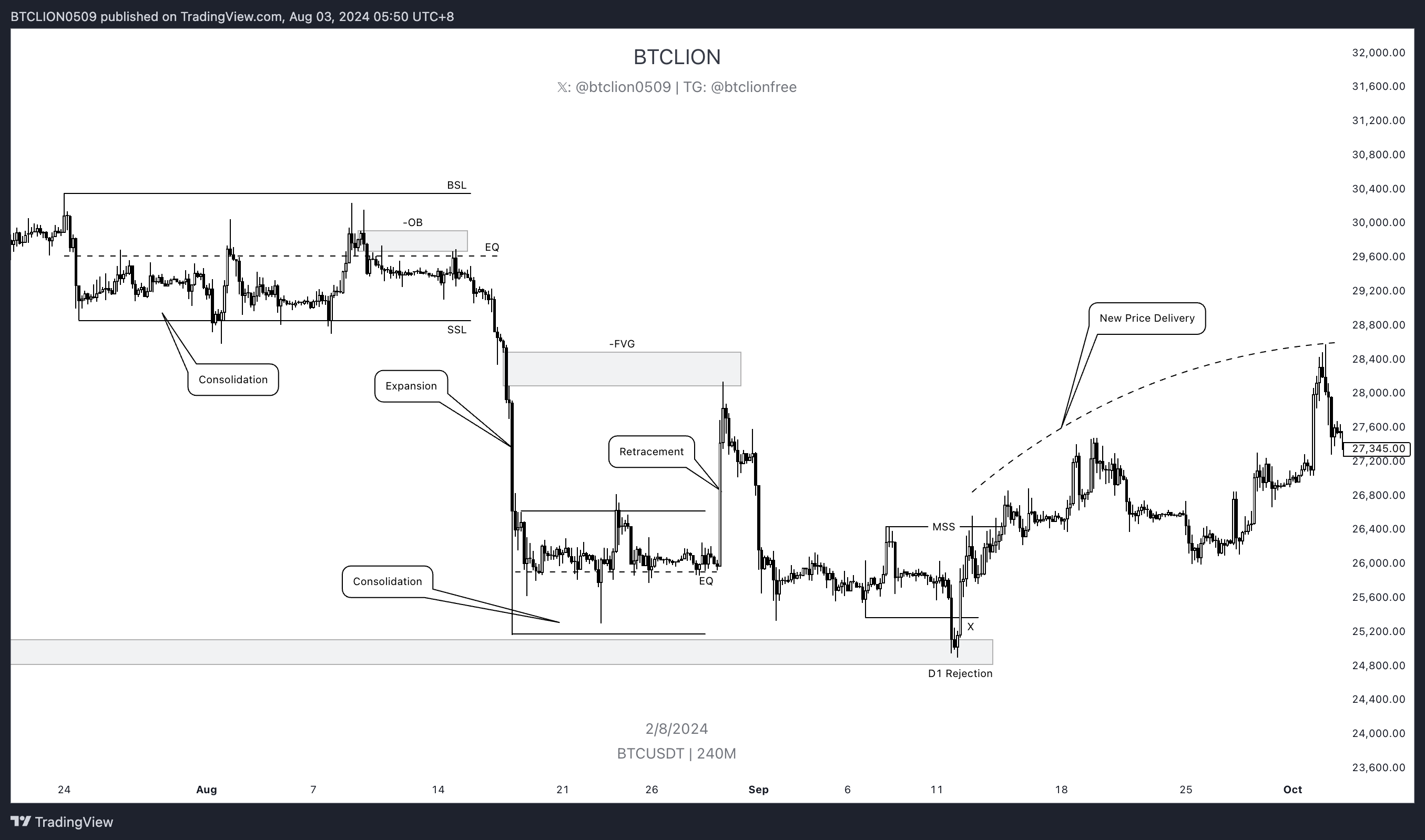
Here, let us review the full chart and observe the details of how IPDA performs Price Delivery.
- First, price begins Consolidation inside the range, moving back and forth while accumulating.
- After price touches the OB at EQ for the final time, Expansion begins.
- Price then begins another round of Consolidation.
- After touching EQ, price begins Retracement.
- Price retraces into the FVG created during Expansion, then sells off again and enters another Consolidation.
- Finally, price will raid H4 liquidity and deliver into the daily POI.
- Price produces Reversal and creates MSS.
- A new round of delivery begins.