Liquidity
When introducing ICT/SMC, we mentioned liquidity. Price only move in response to liquidity and imbalance areas. In this chapter, we will take a deeper look at liquidity.
Institutional funds needs a large amount of order pairing when entering the market, so not every price on the chart can be considered as their entry cost. Institutions rely on a large amount of liquidity to enter positions. The following locations are where liquidity may exist:
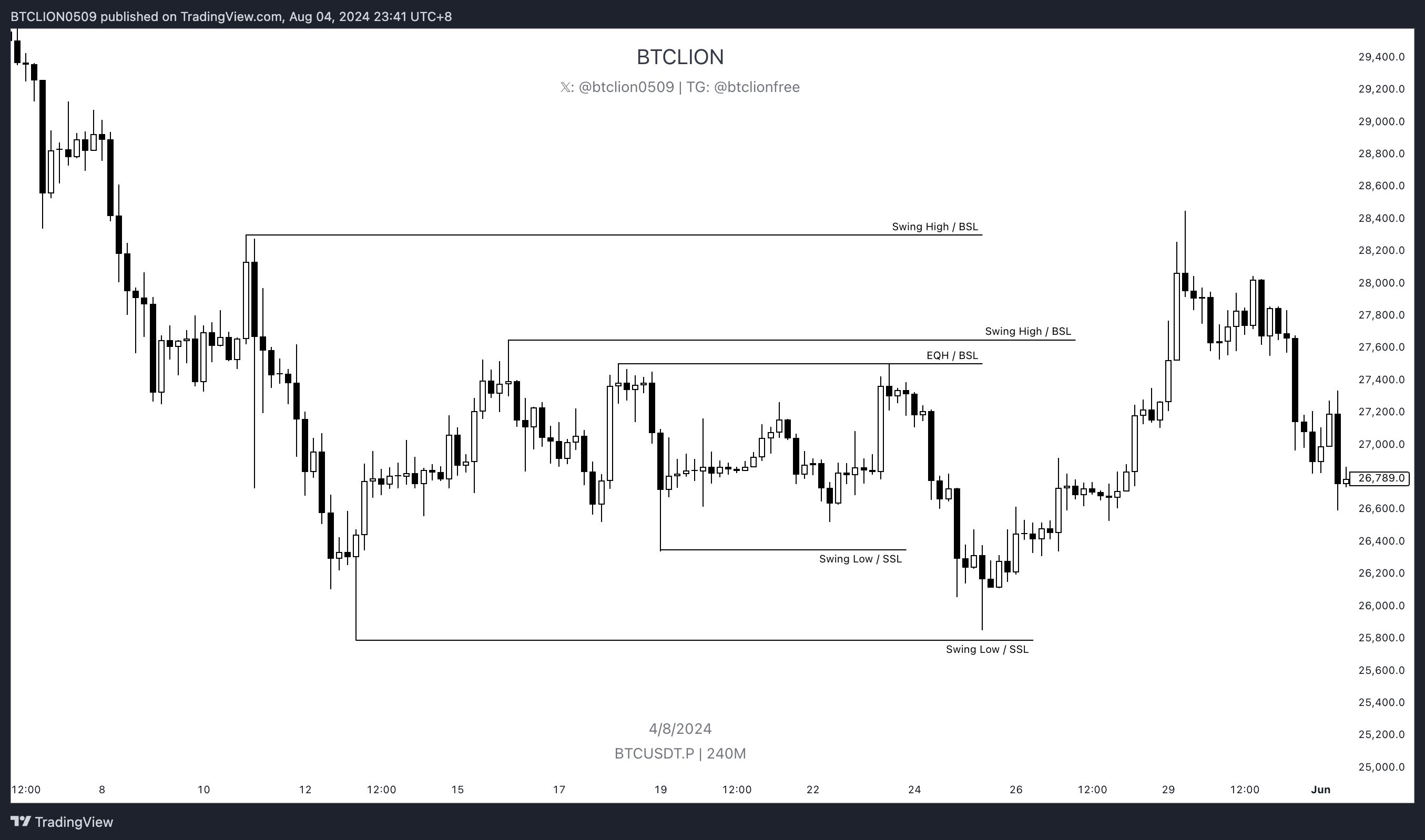
- Swing highs / swing lows
- Equal highs (EQH) / equal lows (EQL)
Identifying Liquidity
Buyside Liquidity (BSL)
- When a clear high is broken, aggressive speculative traders may assume that price is about to leave the range and begin a significant upward move.
- When that breakout happens, a large number of buy orders come in, and short stop-losses are triggered as buy-to-cover orders. This provides the liquidity Smart Money needs for Order Pairing.
- Smart Money exchanges inventory with speculative traders at this area, using their buy orders to sell into and complete short positioning.
- We call these breakout-buy orders from speculative traders Buyside Liquidity (BSL).
Sellside Liquidity (SSL)
- When a clear low is broken, aggressive speculative traders may assume that price is about to leave the range and begin a strong selloff.
- When that breakdown happens, a large number of sell orders come in, and long stop-losses are triggered as sell-to-close orders. This provides the liquidity Smart Money needs for Order Pairing.
- Smart Money exchanges inventory with speculative traders at this area, using their sell orders to buy into and complete long positioning.
- We call these breakdown-short orders from speculative traders Sellside Liquidity (SSL).
Swing High / Swing Low
- A Swing High is a clear high on the chart.
- This is usually where speculative traders place stop-losses, so liquidity exists there.
- When a clear Swing High is broken, we can watch whether price respects the BSL at that high.
- When a clear Swing Low is broken, we can watch whether price respects the SSL at that low.
- Do not chase directly when price breaks out or breaks down, because you cannot know in advance whether that liquidity will be respected.
Equal High / Equal Low
- When two or more Swing Highs or Swing Lows line up at roughly the same level, we can call them EQH or EQL.
- Like Swing Highs and Swing Lows, they contain BSL or SSL.
- The difference is that this liquidity has already been validated, so it tends to carry slightly more weight.
- Do not chase directly when price breaks out or breaks down, because you cannot know in advance whether that liquidity will be respected.
Liquidity Sweep
Also known as:
- Stop Loss Hunt (SH / SLH)
- Liquidity Grab (Grab)
- Liquidity Raid (Raid)
- Swing Failure Pattern (SFP)
- Fu: I do not know what this one is either, but it basically means the same thing.
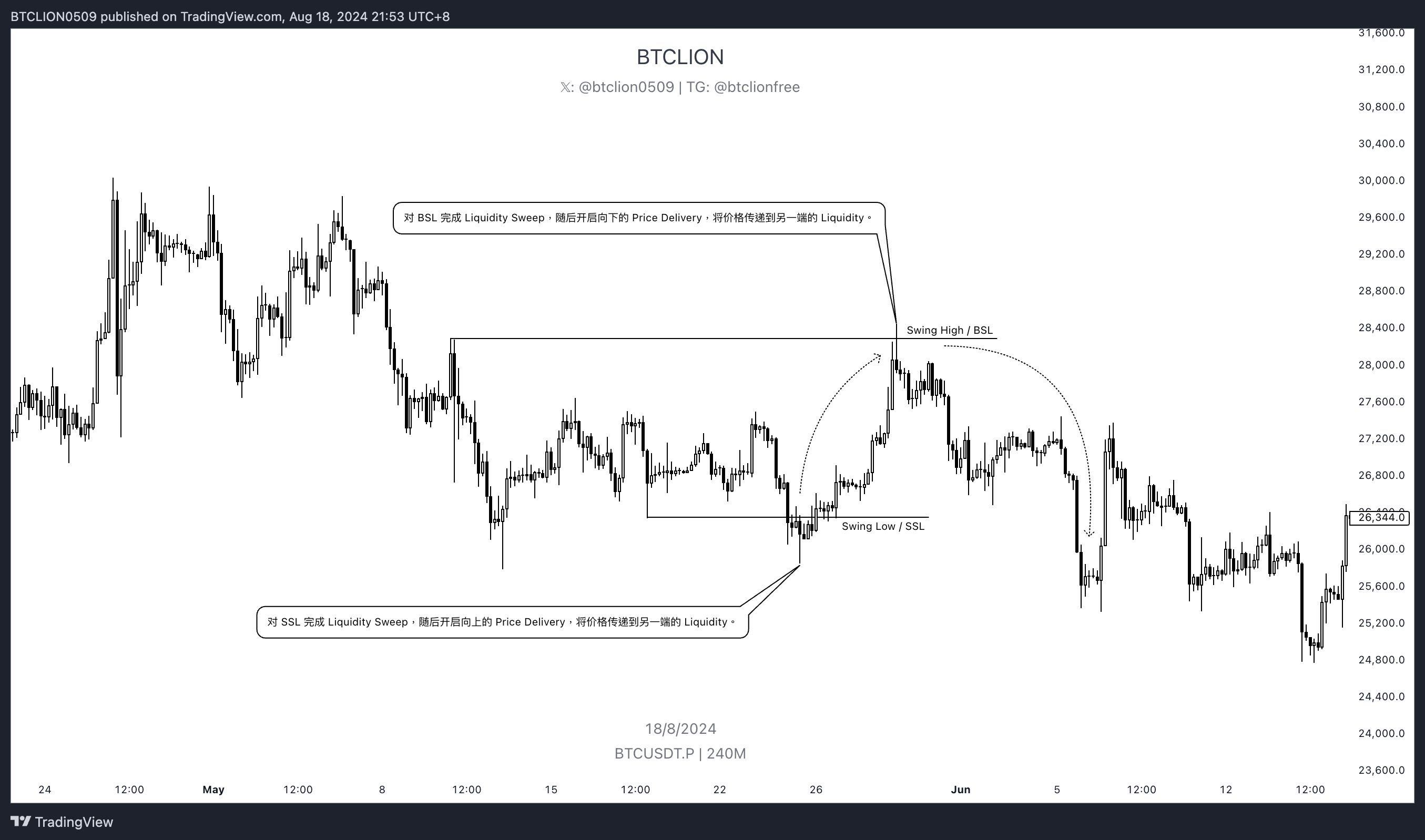
- A Liquidity Sweep is the behavior where price breaks through liquidity and then quickly reclaims the level.
- After price breaks through the level, Smart Money completes Order Pairing with speculative traders, inventory changes hands, and the market then reverses.
- A Liquidity Sweep is the starting point of every bullish or bearish structure.
Liquidity Run and Price Delivery
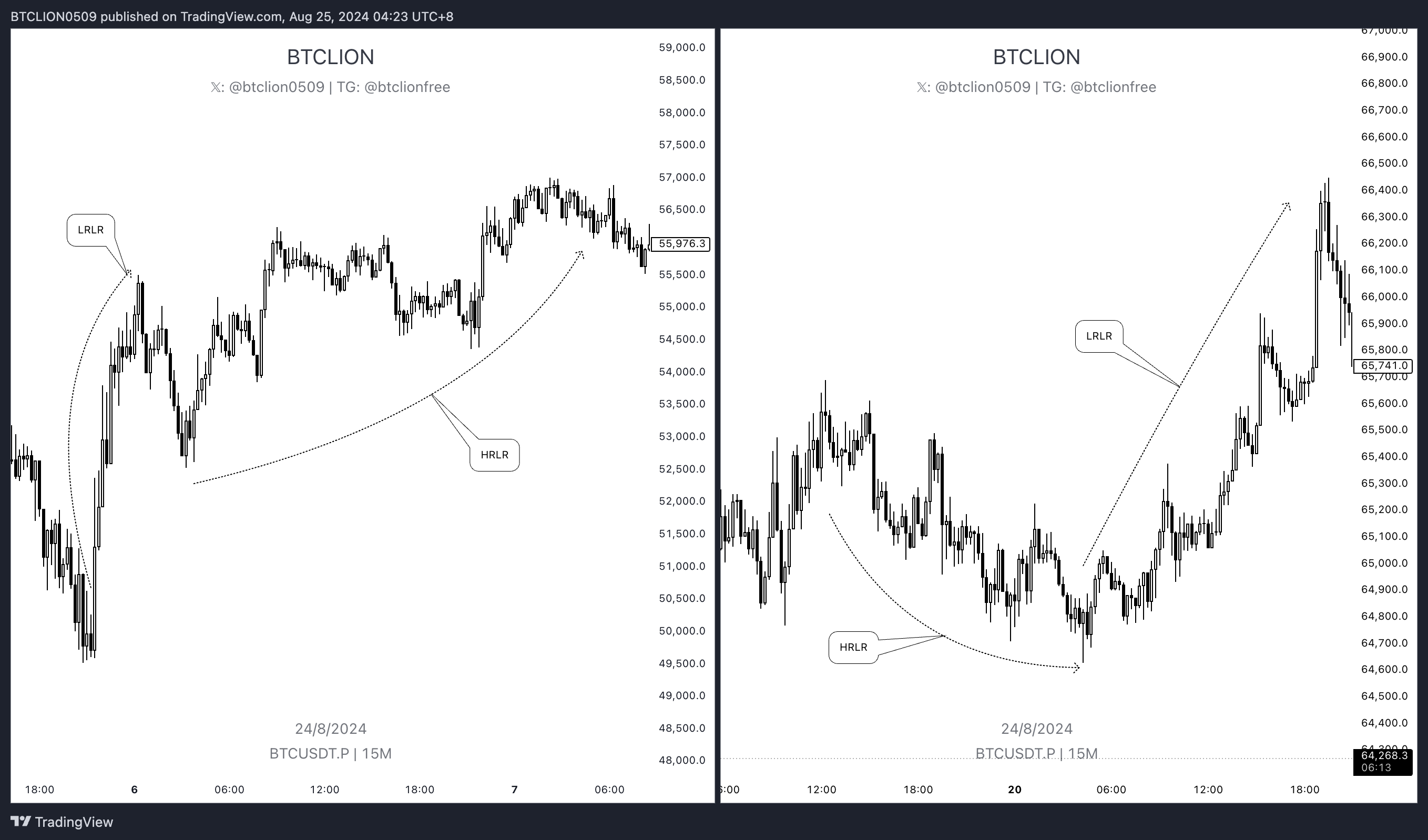
After price raids opposite-side liquidity, price delivery begins. We call this behavior a Liquidity Run.
- Low Resistance Liquidity Run (LRLR)
When price delivers very smoothly and does not spend much time pausing at opposing liquidity, meaning resistance is low, we call it a Low Resistance Liquidity Run (LRLR).
- High Resistance Liquidity Run (HRLR)
When price delivery is not smooth and spends most of its time in a choppy or consolidating state, meaning resistance is high, we call it a High Resistance Liquidity Run (HRLR). This suggests that the current price delivery is not very strong.
When we see HRLR, we can expect a strong one-directional price delivery after the reversal, where price easily breaks through the resistance created during the HRLR and transitions into LRLR.
Change in State of Delivery (CISD)
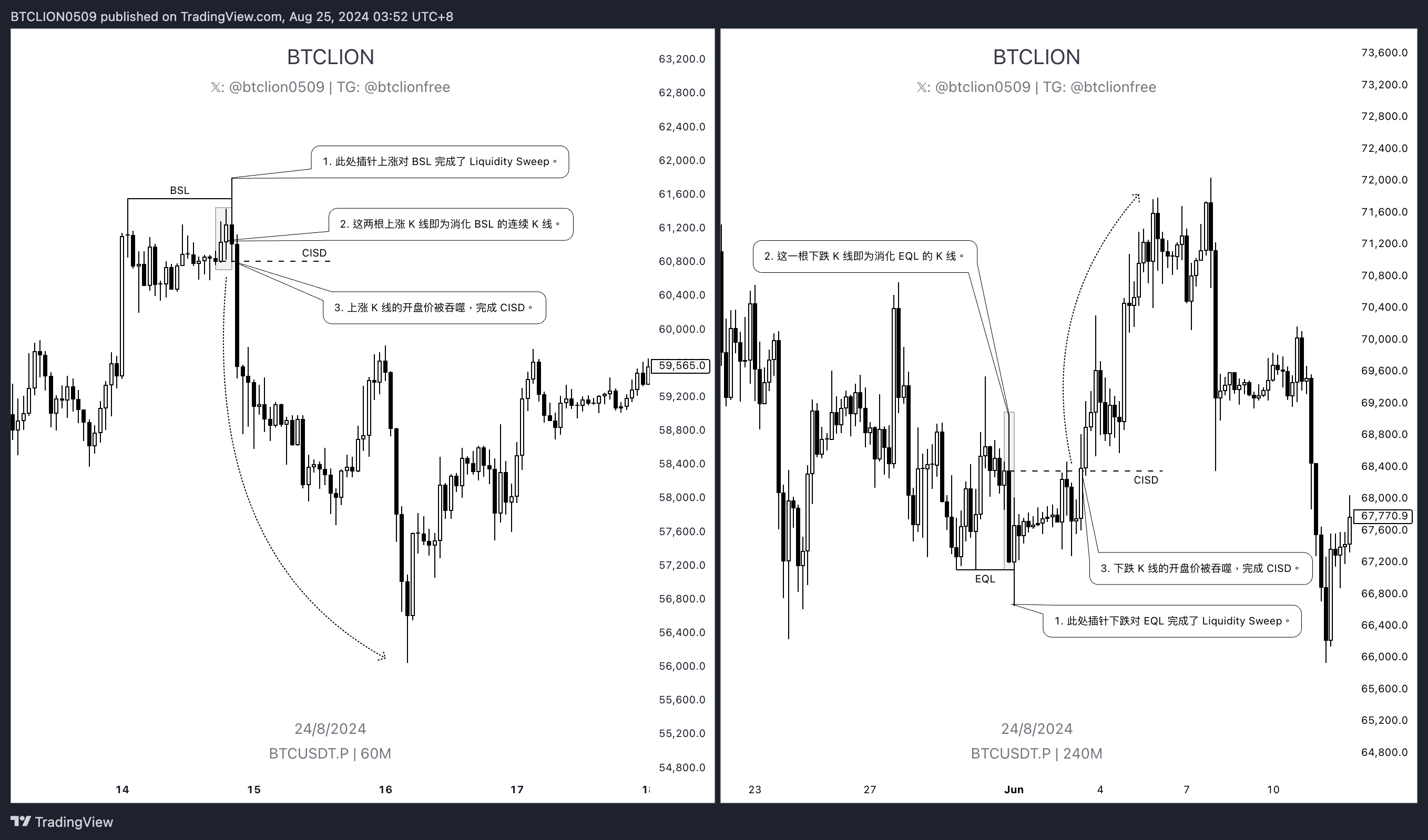
After price completes a Liquidity Sweep, if the closing price of the consecutive candles that absorbed liquidity is engulfed, we can consider that the direction of Price Delivery is about to change. This behavior is called Change in State of Delivery (CISD). Similar to MSS, CISD can also be used to identify reversal price action.